
The Grand Guide to 2026 Topps Series 2 Baseball
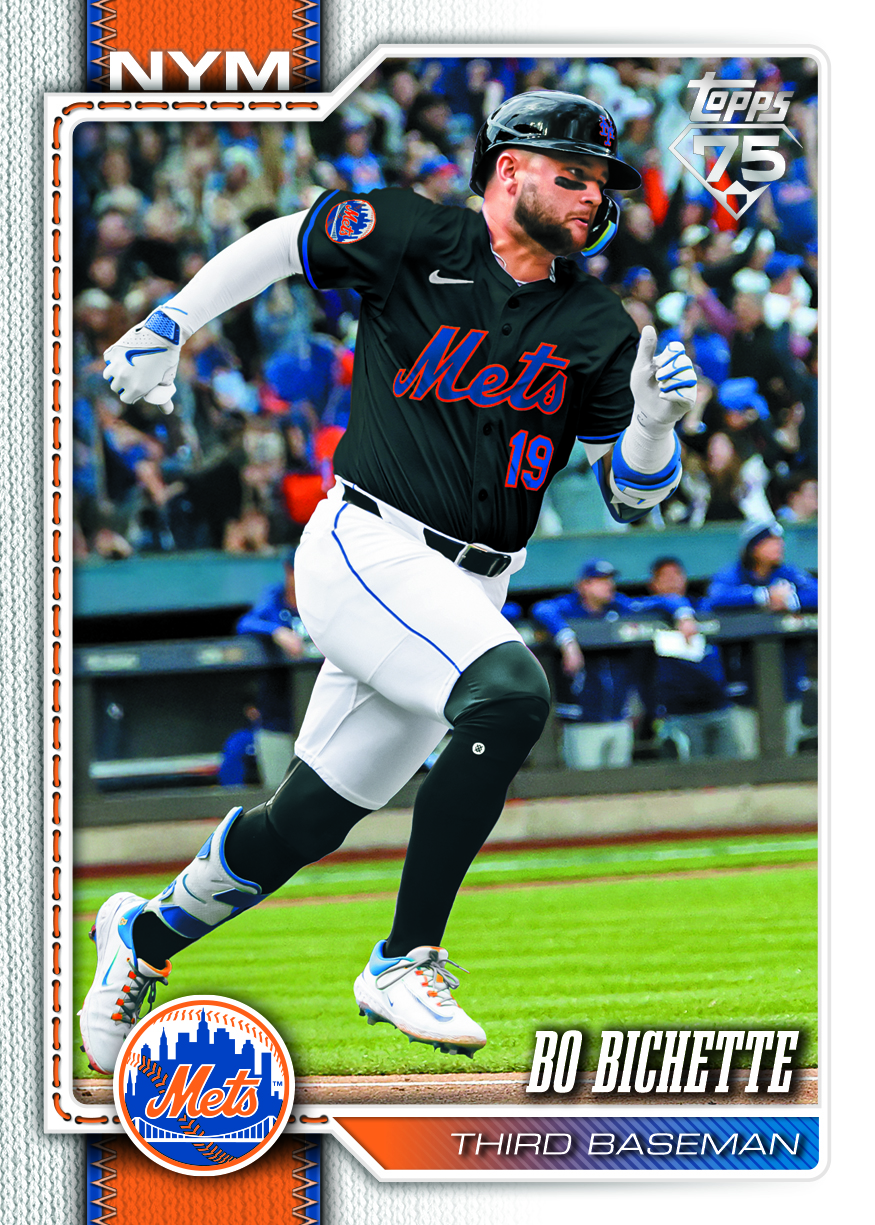
With 2026 Topps Series 2 Baseball, Topps' flagship year enters its second round. The set adds another 350 Base Cards to Series 1, continuing the main checklist with card numbers 351 to 700. The focus is on current MLB stars, new rookies, future stars, league leaders, team cards, and players in new team uniforms.
2026 also marks 75 Years of Topps Baseball. This anniversary runs throughout the product: through special inserts, autographs, variations, and design elements that deliberately reference the brand's long history.
Series 2 doesn't rely on a single big hit. Its appeal lies in the mix: a large base set, Rookie Short Prints, Golden Mirror Variations, classic flagship parallels, retro designs, and inserts with a strong baseball theme. Anyone looking to collect the complete 2026 Topps year cannot bypass Series 2.
What is 2026 Topps Series 2 Baseball?
2026 Topps Series 2 Baseball is the second part of the annual Topps flagship series. Series 1 kicks off the baseball year, Series 2 expands the checklist, and Update Series later responds even more strongly to debuts, trades, and season developments.
Therefore, Series 2 is not purely a "hit" product. It is a classic flagship set: broad, collector-friendly, featuring many players, traditional parallels, short prints, inserts, and some strong autograph and relic lines.
| Format | Content | Focus |
|---|---|---|
| Hobby Box | 20 Packs, 12 Cards per Pack | 1 Autograph or Relic, 1 Silver Pack |
| Jumbo Box | 10 Packs, 40 Cards per Pack | 1 Autograph, 1 Relic, 2 Silver Packs |
| Mega Box | 14 Packs, 14 Cards per Pack | 4 Crackle Foil Parallels, 14 Inserts |
| Value Blaster Box | 6 Packs, 12 Cards per Pack | 3 Base Holiday Parallels, 6 Inserts |
The Hobby Box is the classic entry format for collectors who want to rip flagship on a larger scale. The Jumbo Box is more geared towards hits and Silver Packs. Mega and Value Blaster are more interesting for retail parallels, inserts, and more affordable rips.
Base Set and Parallels
The core of Series 2 is the 350-card Base Set. It includes cards 351 to 700, thus complementing the main series from Series 1.
Series 2 also brings several well-known names in new team contexts. These include Bo Bichette, Edwin Díaz, Freddy Peralta, Kyle Tucker, and Pete Alonso, among others. Such "Players in New Places" cards are often exciting in flagship products because they directly capture important changes in the baseball year on a card.
| Category | Classification |
|---|---|
| Base Cards | Continuation of the main checklist with cards 351 to 700. |
| Rookies | New RCs plus four particularly important Rookie Short Prints. |
| Future Stars | Young MLB players who already have a visible role. |
| League Leaders | Classic flagship cards with statistical season relevance. |
| Team Cards | Traditional component of the main series. |
| Players in New Places | Players in new uniforms or team contexts. |
The Most Important Base Parallels
The parallel structure in 2026 Topps Series 2 Baseball is extensive. Important note: compared to the original draft, some numbering has changed. Gold is /2025, Black is /75, and there's an additional dedicated 75 Years of Topps /75 parallel.
| Parallel | Numbering / Note |
|---|---|
| Rainbow Foil | unnumbered |
| Aqua Rainbow Foil | unnumbered |
| Gold | /2025 |
| Independence Day | /76 |
| 75 Years of Topps | /75 |
| Black | /75 |
| Canvas | /50 |
| Memorial Day Camo | /25 |
| Wood | /25 |
| Printing Plates | 1/1 |
In addition, there are several format-bound parallels, including hobby/jumbo-exclusive Rainbow Foil colors, jumbo-exclusive Sandglitter parallels, retail-exclusive Holo Foils, hanger-exclusive Diamante Foils, and Value Blaster-exclusive Holiday parallels.
Collector Classification
A Gold /2025 is part of the flagship tradition and is primarily interesting for set builders, team collectors, and player collectors. It becomes truly stronger with lower numbering: Black /75, Canvas /50, Memorial Day Camo /25, Wood /25, Clear Variations /10, or 1/1 cards.
However, in Series 2, it's not just the numbering that counts. The combination of player, card type, and demand is crucial. A low-numbered parallel of an important rookie, a franchise star, or a strong photo variation is significantly more interesting than a rare card without a genuine collector base.
Rookies: Who Really Carries Series 2
The Rookie Short Prints are one of the most important points in the product. Checklist Insider lists four Base Rookie Short Prints:
| Rookie SPs | Team Context |
|---|---|
| Kevin McGonigle | Detroit Tigers |
| JJ Wetherholt | St. Louis Cardinals |
| Carson Benge | New York Mets |
| Justin Crawford | Philadelphia Phillies |
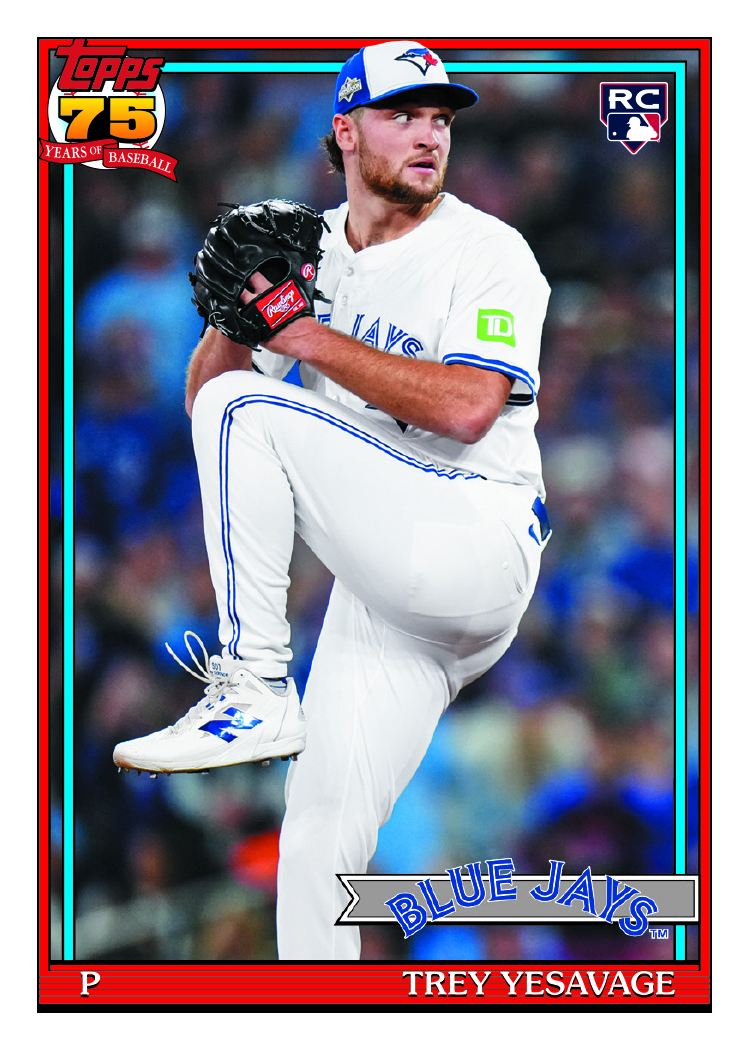
Additionally, there are other rookie themes surrounding Munetaka Murakami, Trey Yesavage, Tatsuya Imai, Chase DeLauter, Kazuma Okamoto, and other names. Series 2 therefore does not have a simple "one player carries everything" structure. Demand is spread across short prints, international rookie names, pitchers with upside, and players with clear team fanbases.
| Player | Assessment |
|---|---|
| Munetaka Murakami | Murakami is no ordinary rookie. He arrives in MLB with star status from Japan, an existing international fanbase, and a clear power profile. Particularly striking is his Golden Mirror Variation, on which he recreates the pose from Frank Thomas' legendary 1992 Topps card. This is more than a nice image detail: Topps deliberately connects a new international rookie with its own baseball history. For collectors, Murakami is therefore one of the most exciting names in the product – not just because of the RC logo, but because of his story, market interest, and design reference. |
| Kevin McGonigle | McGonigle is one of the most important rookie names in Series 2. His early Topps NOW card reached a print run of 22,722 copies, which shows how quickly his name gained attention in the hobby. His RC SP is therefore not just a rarer rookie card, but one of the clear short-print chases of the product. For Tigers collectors, McGonigle, as a young infielder with a strong hit tool and high expectations, fits very well into the current Detroit narrative. |
| JJ Wetherholt | Wetherholt made it directly to the Cardinals' Opening Day roster. This is important for collectors because his cards are not just driven by prospect expectations, but are linked early on with actual MLB playing time. He brings a strong infield profile, on-base ability, and a large Cardinals fanbase. His RC SP is therefore one of the cleaner collecting points in Series 2: not just because of hype, but because of his role, organization, and player type. |
| Carson Benge | Benge is not a purely high-profile name, but he delivered early MLB moments. Against Washington, he was part of a 10-run inning for the Mets in the 12th inning, contributing two run-scoring hits. This was followed by other strong performances, including a 5-for-5 game in early June. For collectors, his card is more of a development and Mets chase than an immediate superstar chase. This is precisely what makes him interesting: collectors of Benge are betting less on the biggest name and more on role, production, and long-term development. |
| Justin Crawford | Crawford brings speed, defense, and a strong Phillies fanbase. His cards depend more on whether his bat consistently performs. His first MLB home run on May 8, 2026, was a good hobby moment: a two-run shot in the 8th inning that tied the game. Such moments help a player profile that is otherwise largely defined by athleticism, base-stealing, and defense. For Phillies collectors, his RC SP is one of the most important team chases. |
| Trey Yesavage | Yesavage must be categorized differently than the young bats. For pitchers, it's not just about stuff, but also workload, health, and role in the rotation. Toronto was deliberately cautious with his development after Yesavage had already accumulated many intense innings across the minors, MLB, and postseason in 2025. At the same time, in May, he showed with six strikeouts over four scoreless innings why his cards can quickly attract attention. His Rookie Cards are interesting but much more dependent on performance and health. |
| Tatsuya Imai | Imai is a classic high-variance profile. His adjustment to MLB hitters was not cleanly linear: there were starts with clear problems in command, efficiency, and home run susceptibility, but also phases where his stuff seemed visibly better. For him, card value is more closely tied to specific starts and developmental steps than for more stable rookie bats. For collectors, this means: exciting, but nothing to categorize without risk. |
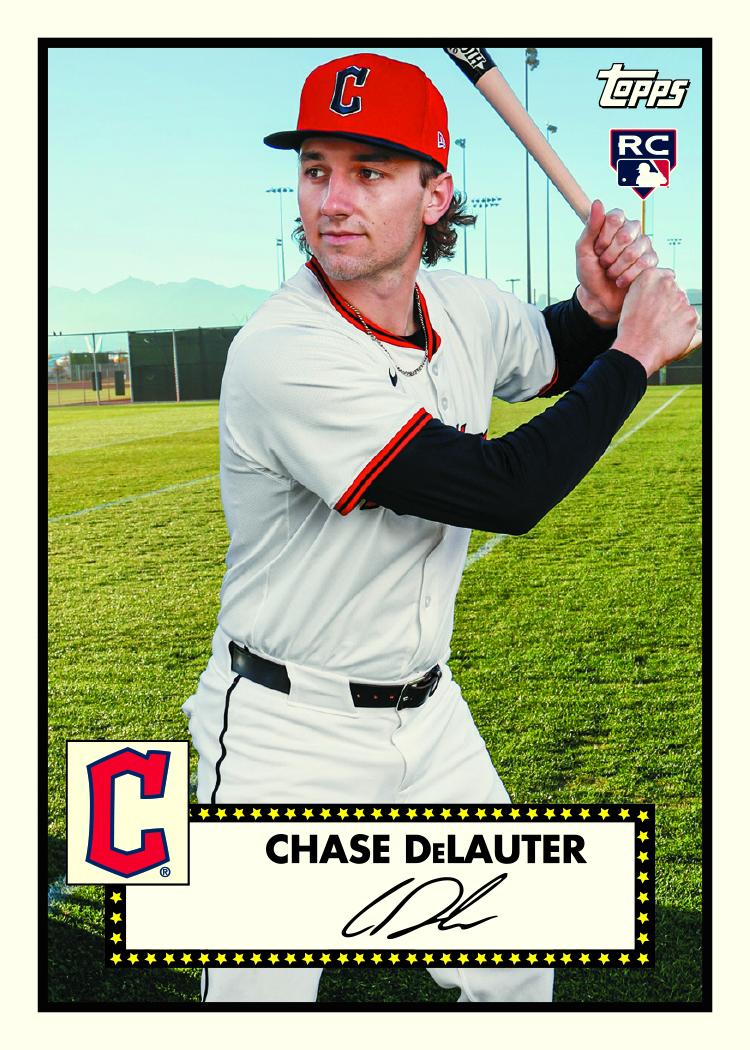
| Chase DeLauter | DeLauter is primarily visible through the 1952 Rookie Variation. He brings a well-known prospect profile and Guardians context. For Series 2, he is less of the loudest name but a good fit for collectors who want to combine rookie design variations and prospect development. |
Conclusion on the Rookie Class
Series 2 does not have a single clear number 1. McGonigle and Wetherholt carry the Rookie SP side. Murakami brings the international star factor and the most striking Golden Mirror story. Benge and Crawford depend more on MLB role, team fanbase, and development. Yesavage and Imai are pitchers with more risk, but also with moments that can move the market short-term.
Golden Mirror, 1952 Variations, and Modern Flagship SPs
The Golden Mirror Variations have become one of the most important modern flagship SPs. Each Base Card has an alternate photo variation with a gold back. Series 2 continues this structure and supplements it with further variation lines.
| Variation | Classification |
|---|---|
| Golden Mirror Variations | Alternate photos with gold backs for all 350 Base Cards. |
| Golden Mirror Legends | Legends within the Golden Mirror structure. |
| Through the Years Golden Mirror Rookie Variations | Homages to famous Topps cards, numbered /25. |
| Base Card 1952 Rookie Variations | Rookies in the classic 1952 Topps style, numbered /100. |
| 1952 Variations | Design variations in the 1952 style, numbered /100. |
| Clear Variations | Hobby exclusive, numbered /10. |
| True Photo Variations | Photo-focused variants, numbered /100. |
| Vintage Stock Retro Variations | Retro-stock feel, numbered /99. |
| Player Number Variations | Numbered /20. |
The Murakami Golden Mirror card is the most striking modern chase because it is not only rare, but it makes a direct visual reference to Frank Thomas's 1992 card. The 1952 Rookie Variations work differently: they place modern rookies in the most important historical Topps design environment. This particularly appeals to collectors who collect flagship not just for players, but also for design history.
Inserts: Retro Designs, Ballparks, and Baseball Feel
Series 2 combines retro designs, ballpark references, and classic baseball motifs. Topps continues several lines from Series 1 and complements the product with new or recurring insert themes.
| Insert | Classification |
|---|---|
| 1991 Topps Baseball | Retro line celebrating the 35th anniversary of the 1991 design. |
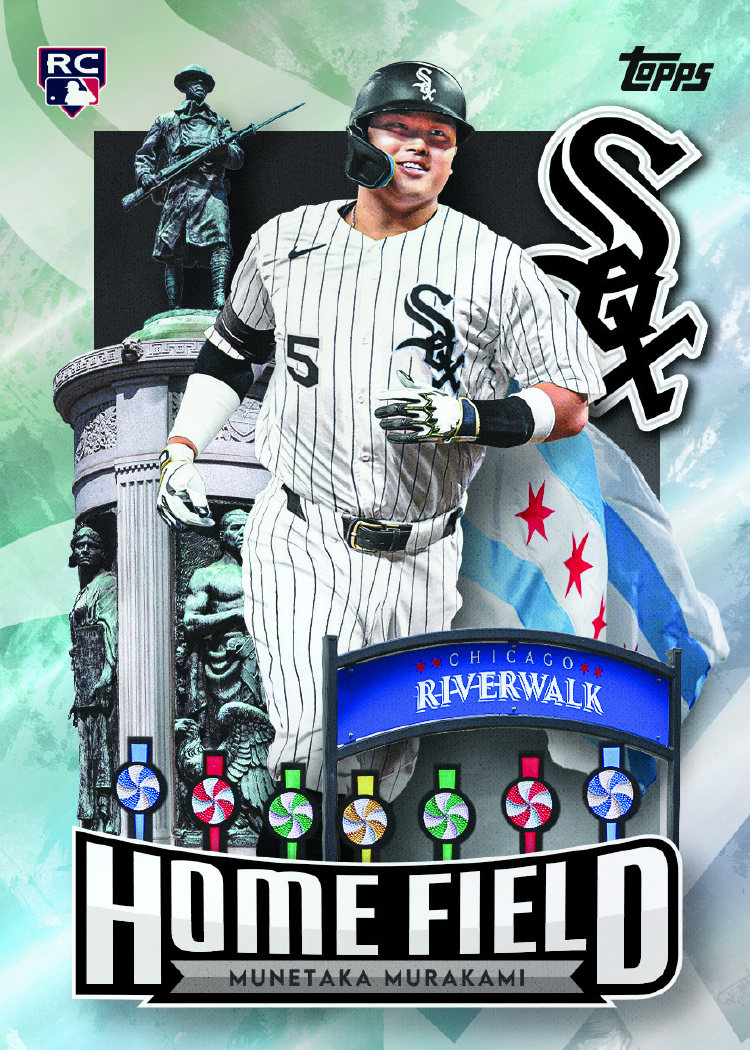
| Home Field | Players with imagery related to their ballpark and hometown. |
| Heavy Lumber | Wood-grain aesthetic for strong hitters and legends. |
| All Aces | Pitcher-focused line for dominant starters. |
| Diamond Dust | New design with a batter's box and infield dirt concept. |
| 75 Years of Topps Baseball | Anniversary reference to Topps history. |
| Cover Athletes | Homage to players featured on Topps product covers. |
| Stars of MLB | Retail-oriented insert line. |
| Titans of the Game | Retail-oriented insert line with a star focus. |
Home Field is particularly strong for team collectors because the card doesn't just show the player, but also incorporates the location. Especially in baseball, ballparks are part of a team's identity.
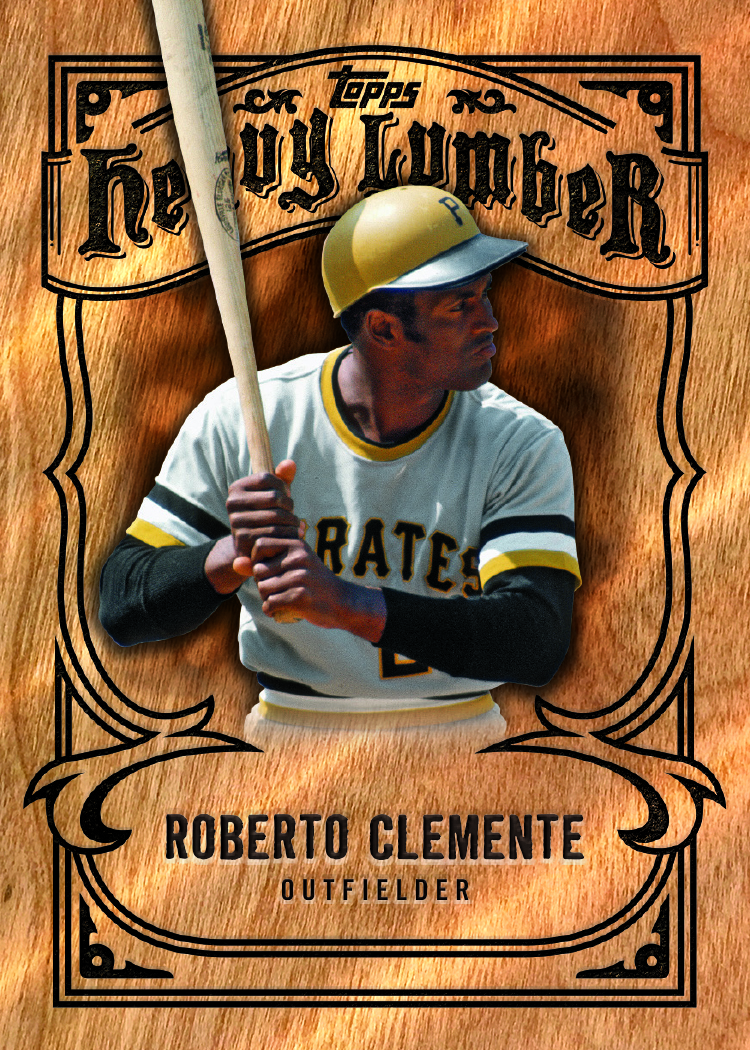
Heavy Lumber works with material aesthetic and hitter relevance. For players like Roberto Clemente, the wood grain aesthetic fits very well because it directly connects to bats, history, and classic baseball. This doesn't feel like an arbitrary insert, but like a line with a recognizable theme.
Autographs and Relics
Series 2 is not primarily bought for quick hit-chasing. The autographs and relics complement the flagship set, but are not the sole focus. If you pull a strong card here, it's particularly good when player, design, and rarity align.
| Category | Classification |
|---|---|
| Real One Autographs | Classic flagship autographs. |
| Base 1952 Variation Autographs | Rookies and stars in 1952 design with autograph. |
| Red Ink Autographs | Rare Red-Ink variations of selected autographs. |
| Flagship Autograph Patch Cards | Autograph plus patch element. |
| City Connect Swatches | Relics with uniform and team connection. |
| In the Name Relics | 1/1 nameplate relics as one-of-a-kind pieces. |
| 75 Years of Topps Die-Cut Autographs | Anniversary autographs in die-cut format. |
| 75 Years of Topps Baseball Autographs | Autographs with direct anniversary reference. |
| World Champion Autographs | Autograph line referring to World Series winners. |
| 75th Anniversary Buybacks | Graded buyback cards from Topps history. |
The strongest hit cards are not simply the rarest. Cards where everything comes together are particularly interesting: a relevant player, clean design, low numbering, and a clear collector group. A 1952 Variation Autograph of an important rookie or an In the Name Relic 1/1 of a big name carries significantly more weight than any random hit without context.
Key Collection Points
| Chase / Collection Point | Why it matters |
|---|---|
| Kevin McGonigle RC SP | One of the product's most important Rookie Short Prints. |
| JJ Wetherholt RC SP | Opening-day rookie with Cardinals base and strong prospect profile. |
| Carson Benge RC SP | Mets rookie with early MLB moments and development potential. |
| Justin Crawford RC SP | Phillies speed profile with team fanbase and early home run moment. |
| Munetaka Murakami Golden Mirror | Frank Thomas 1992 homage and international rookie focus. |
| 1952 Rookie Variations | Historic Topps design with modern rookies. |
| Golden Mirror Variations | Central modern flagship SP structure. |
| Gold /2025 | Classic annual parallel of the flagship series. |
| Black /75, Canvas /50, Camo /25, Wood /25 | Significantly more exciting low-numbered flagship parallels. |
| Clear Variations /10 | Hobby-exclusive, very low variation tier. |
| Home Field | Team and ballpark connection. |
| Heavy Lumber | Strong material feel for hitters and legends. |
| In the Name Relics 1/1 | Most important one-of-a-kind relics. |
| 75th Anniversary Buybacks | Direct reference to Topps history. |
Conclusion
2026 Topps Series 2 Baseball is the second central building block of the flagship year. The set is broader than a pure hit product and thrives on the Base Set, rookies, Short Prints, Golden Mirror Variations, 1952 Rookie Variations, retro inserts, and classic flagship parallels.
The most important rookie themes are Kevin McGonigle, JJ Wetherholt, Carson Benge, and Justin Crawford as Rookie Short Prints. Munetaka Murakami brings the biggest international story and one of the most striking Golden Mirror Cards of the product. Pitchers like Trey Yesavage and Tatsuya Imai are interesting but riskier because their cards depend more heavily on health, command, and rotation role.
Collectors of Series 2 should first clearly differentiate: Is it about complete flagship sets, Rookie SPs, Golden Mirror Variations, 1952 Rookie Variations, Team Cards, or inserts like Home Field and Heavy Lumber?
Precisely this mix defines Series 2. It's not a product that only works through one big hit. It's a set for collectors who read flagship through its breadth, details, player changes, rookie stories, and Topps history.
Overview
| Product | 2026 Topps Series 2 Baseball |
|---|---|
| League | MLB |
| Release | June 10, 2026 |
| Base Set | 350 cards |
| Card Range | 351 to 700 |
| Hobby Box | 20 packs, 12 cards per pack |
| Hobby Box Hit | 1 Autograph or Relic, 1 Silver Pack |
| Jumbo Box | 10 packs, 40 cards per pack |
| Jumbo Box Hits | 1 Autograph, 1 Relic, 2 Silver Packs |
| Mega Box | 14 packs, 14 cards per pack |
| Value Blaster Box | 6 packs, 12 cards per pack |
| Key Rookies | Kevin McGonigle, JJ Wetherholt, Carson Benge, Justin Crawford, Munetaka Murakami, Trey Yesavage, Tatsuya Imai, Chase DeLauter |
| Key Inserts | 1991 Topps Baseball, Home Field, Heavy Lumber, All Aces, Diamond Dust, 1952 Rookie Variations |
| Key Collection Points | Rookie SPs, Golden Mirror Variations, 1952 Rookie Variations, Gold /2025, Black /75, Canvas /50, Camo /25, Wood /25, In the Name Relics 1/1 |
| Checklist | 2026 Topps Series 2 Baseball |